


This week: the new Raycash site is live, Raypoints are starting to take shape, a16z published an interesting argument around permissionless chains and AML, Washington has a fairly consequential crypto vote coming up, and private yield keeps moving closer to something ordinary people might actually use.
In House
A few things from our side first.
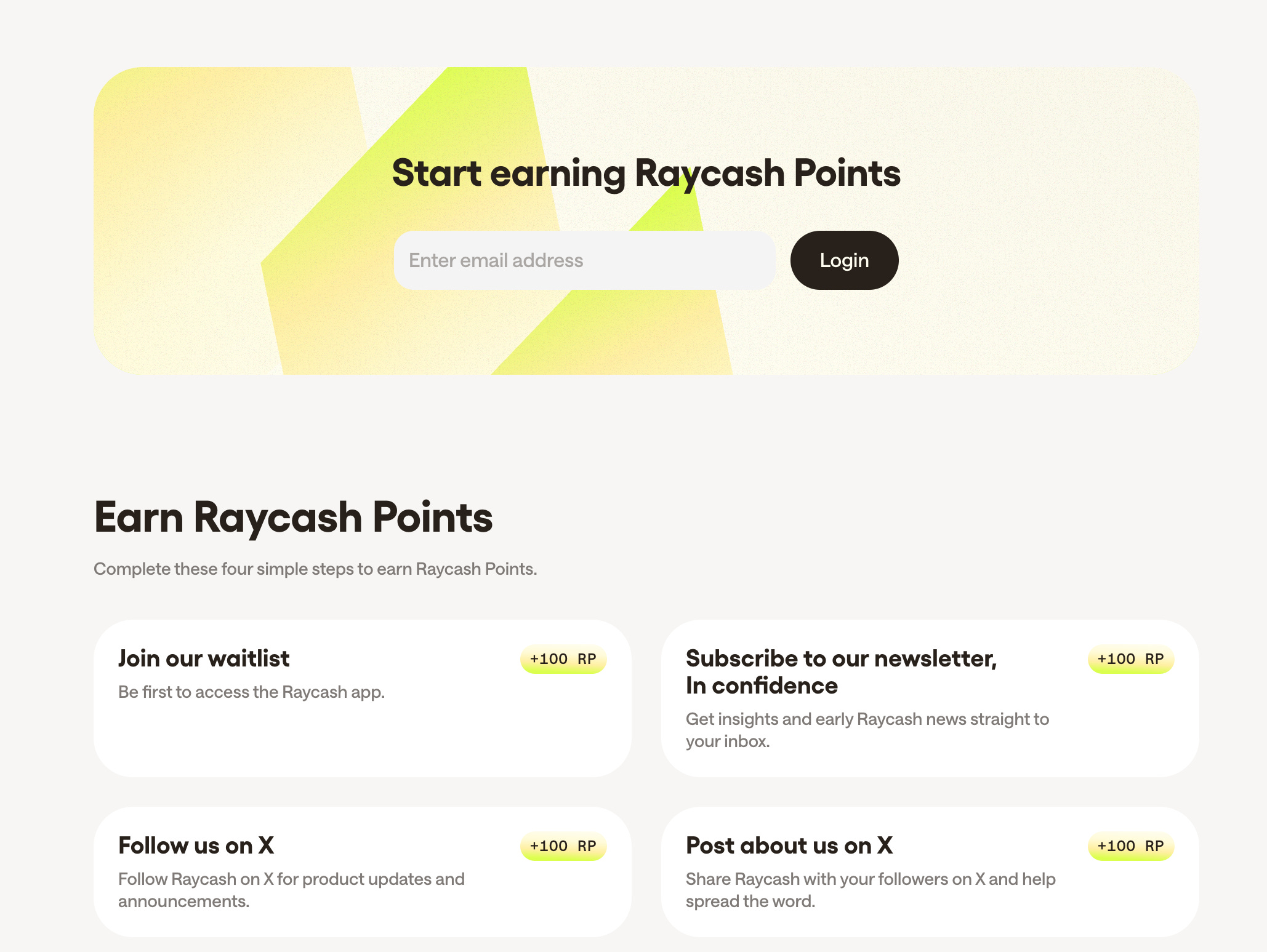
The new Raycash website is live.
We have been working on it for a while, so there is a lot that changed visually, although the part we care about most is what is happening behind the homepage. You can now create an account, complete challenges and earn Raypoints. The first challenges are already up, and we will be adding more as we go, including a few that are tied more closely to how people actually use Raycash rather than simply following us around the internet.
If you have been waiting for the beta, it is worth making an account now. You can start building up Raypoints while access continues to open, and beta invites are still going out in waves.
Join the waitlist at raycash.xyz →
On Our Radar
Here is what got us excited this week:
a16z says permissionless blockchains can meet US AML rules
a16z crypto put out a paper this week that is probably more important for banks than the headline makes it sound. Their argument is that US AML and sanctions rules do not require financial institutions to operate on infrastructure they control. The Bank Secrecy Act asks firms to build reasonable risk programs around the activity they conduct, which still leaves room for transactions to settle on public networks like Ethereum.
It sounds obvious when written that way. In practice, a lot of institutional blockchain discussions over the last few years have started from the assumption that public chains create a compliance problem while private infrastructure is inherently easier to manage. That distinction has already been getting blurry anyway. BlackRock has been running BUIDL on Ethereum since 2024, and Apollo has put tokenized credit across several permissionless networks. The infrastructure is already being used.
What a16z is doing here is giving the legal argument a much clearer shape. That could end up being useful for the person inside a bank who already wants to use public infrastructure and needs something credible to put in front of legal and compliance. Once that conversation starts happening inside more institutions, the question becomes less about whether permissionless infrastructure can be used and more about what controls need to sit around it.
Bessent pushes for CLARITY Act cloture, and Section 10307 is the real story
The CLARITY Act is heading into one of those procedural votes that sounds boring until you look at what is actually hanging on it.
Treasury Secretary Scott Bessent has been publicly urging senators to support the cloture motion scheduled for Tuesday, September 15. It needs 60 votes. Republicans have 53 seats, so some Democratic support is required, and expectations around passage have dropped sharply over the past few months.
The section we are watching most closely is 10307.
It would require Treasury to formally study the privacy and financial inclusion benefits of self-custody wallets. On paper, that sounds modest. In practice, getting self-custody recognized directly in statute would matter a lot.
Right now, many of the boundaries around wallets, custody, privacy and market infrastructure are still being worked out through regulators, enforcement actions and court cases. Legislation gives the industry a much firmer reference point.
So while most of the coverage will naturally focus on whether the bill advances, there is a quieter question underneath it: how much legal room will US users ultimately have to hold and transact with digital assets on their own terms?
Private vaults are becoming the norm
Another private yield product went live this week.
AnomaPay launched Shielded Morpho Vaults, allowing users to deposit into Morpho lending vaults without putting their balances and positions on display for anyone with a block explorer.
The system uses zero-knowledge proofs to verify what needs to be verified while keeping the underlying user information private.
What makes this interesting is the timing.
A few months ago, Zama and Morpho launched confidential DeFi yield infrastructure built around FHE and aimed much more at the institutional side of the market. Now we are seeing a separate team arrive at a similar product idea for retail users using a different cryptographic stack.
That starts to feel like a pattern.
Onchain yield inherited radical financial transparency because that was the easiest architecture to build first. Every deposit visible, every withdrawal visible, every position traceable back through a wallet.
There is no particularly good reason that needs to remain the default.
Morpho already simplified the lending experience by letting vaults handle market selection for users. Privacy feels like the next obvious piece of that UX: earn onchain without publishing your financial life along the way.
We expect to see a lot more of this.Thanks,
From the Raycash team
.
